

By Sarah M Lawton
As AI becomes part of everyday organisational work, how do small research organisations decide where it is genuinely useful, where it is risky and where human judgement remains essential?
Artificial intelligence is rapidly becoming part of everyday professional life. Across universities, charities, businesses and public bodies, AI systems are increasingly being used to organise information, support decision-making and reduce administrative workload. New tools appear almost weekly, often accompanied by predictions that AI will transform the way organisations operate.
Yet for many organisations, a more immediate question remains.
What can AI usefully do today?
For the Landscape Research Group (LRG), this question has become increasingly relevant. Like many learned societies, LRG operates through a combination of staff time, volunteer expertise and member support. As activities grow, so too does the challenge of maintaining quality, transparency and accountability without placing ever greater demands on a limited number of people.
Over the past six months, I have explored this question through a series of practical experiments undertaken in support of LRG activities. These have included the development of a new doctoral funding database, work supporting the implementation of a new membership platform and a series of experiments exploring automated content production and distribution.
The objective was not to determine whether AI is good or bad. It was to understand where it creates genuine value, where its limitations remain and what this might mean for a small research organisation.
Taking responsibility for the wider implications of AI
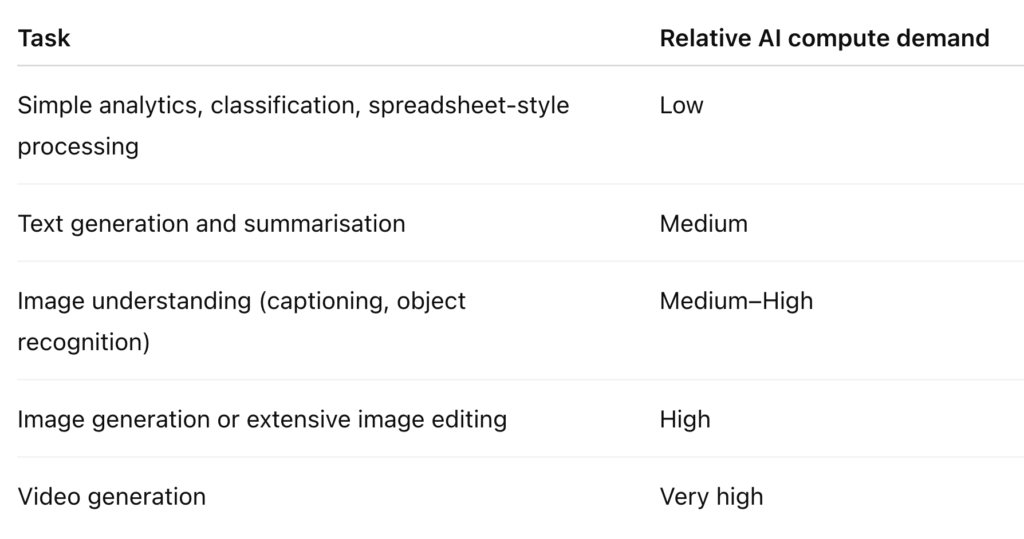
AI presents challenges as well as opportunities. Alongside questions of governance, transparency and accountability, concerns have been raised about the environmental impacts associated with large-scale AI systems.
These considerations are particularly relevant to organisations working in environmental and sustainability-related fields. LRG’s exploration of AI should therefore be understood not as an endorsement of AI, but as an attempt to understand where these technologies create genuine value and where they do not.
Responsible AI use is not simply about what can be automated. It is about understanding where the benefits genuinely outweigh the costs.
Organising knowledge at scale
One of the clearest successes emerged from a challenge familiar to many researchers.
Finding doctoral funding can be surprisingly difficult.
Doctoral funding opportunities are dispersed across universities, government agencies, charities, professional bodies and industry partnerships, often using different terminology and application routes. The result can be difficult to navigate, particularly for early-career researchers.
At the request of the LRG Membership Sub-Committee, I began developing a structured doctoral funding database designed to bring together landscape-relevant funding opportunities from around the world into a single searchable resource.
This proved to be an area where AI was genuinely valuable.
During the build stage, AI supported the categorisation of funding opportunities, the development of search taxonomies, the organisation of large datasets and the identification of patterns across hundreds of records. It also assisted with technical planning, database design and the development of search and retrieval approaches.
The project became a collaborative exercise between human expertise and machine assistance. Verification remained a critical part of the process. AI assisted with organisation, categorisation and analysis, but records still required human review to confirm accuracy, relevance and consistency. As with any research tool, outputs were only as reliable as the oversight applied to them. Under my direction, AI could rapidly process and organise information, while trustees applied verification, interpretation and quality control. The front-end platform is now being developed by a professional web developer who is also using AI-assisted tools. As with the database itself, however, the value comes not from the technology alone but from the expertise required to apply it effectively.
What changed was the balance of effort.
Tasks that would previously have required significant manual administration could be completed more efficiently, allowing more time to focus on quality, usability and editorial oversight.
For a small organisation, this distinction matters.
The greatest immediate value of AI may not lie in making decisions. It may lie in helping organisations organise and manage knowledge more effectively. The efficiencies created during the build process made the project feasible within the time available. Without those efficiencies, assembling and structuring information at this scale would have been significantly more difficult within the resources available to a small organisation.
Three questions every organisation should ask about off-the-shelf AI
1. Does information entered into an AI system become public?
Generally, no. Information entered into an AI platform is not automatically published online or made searchable by other users. However, organisations should not assume that information remains entirely private simply because it is not publicly visible.
2. Does information entered into an AI system leave the organisation’s direct control?
Often, yes. Many AI services process information using infrastructure operated by external providers. This creates governance, confidentiality and privacy considerations that may differ from those associated with locally managed systems.
2. Can information entered into an AI system be used to train future models?
The answer depends on the platform, account type, settings and terms of service in place at the time. These arrangements can also change over time.
A practical example (correct at the time of writing, June 2026): In ChatGPT, for example, go to Settings → Data Controls and look for “Improve the model for everyone”. If enabled, eligible conversations may be used to help improve future models. If disabled, they will not be used for model training. Other AI providers offer similar controls, although the terminology and options vary. Organisations should verify the current settings and terms of any AI platform they use rather than relying on assumptions.
The lesson is simple: responsible AI use requires organisations to understand not only what a system can do, but also how it handles information.
When automation isn’t the answer
The least successful experiments involved my attempts to make communications tasks more efficient.
This was perhaps the most surprising finding.
For several years, AI has formed part of my own communications and creative practice. Through both professional work and ongoing postgraduate research, I have explored how AI can support writing, editing, audience adaptation, knowledge synthesis and creative development.
Used in this way, AI has proved consistently valuable. It can help generate first drafts, summarise lengthy documents, identify key themes, adapt content for different audiences and support the development of ideas. Like many communications professionals, I increasingly use AI as part of an editorial workflow in which human expertise remains firmly in control.
Encouraged by these results, I began exploring whether similar technologies might support wider content production and distribution workflows within LRG.
The reality proved more complicated.
While the systems were capable of generating large volumes of material, much of the output lacked originality, insight and editorial judgement. Even when given high quality content from which to draw inspiration, output content often became repetitive, generic or disconnected from the specific interests and concerns of LRG members.
The problem was not that the technology failed. The problem was that content generation and content development are not the same thing.
AI was often useful when working alongside an editor. It was considerably less effective when attempting to replace the editorial process itself.
A second challenge emerged from the technical side of the experiment.
Several attempts were made to create automated workflows linking content creation, publication and distribution through a combination of AI services and no-code automation platforms. While these systems were theoretically capable of automating large parts of the workflow, implementation proved significantly more complex than initial assessments suggested.
Workflows required ongoing maintenance, monitoring and quality assurance. Outputs still required review and correction. As complexity increased, so did the time required to manage the system.
In practice, the anticipated efficiencies failed to materialise and it quickly became clear that the effort required to maintain the system outweighed the benefits it delivered.
Viewed through the lens of responsible technology use, this became one of the most important findings from all three case studies. If AI is to justify its environmental, financial and organisational costs, it must create meaningful value. In this instance, the balance was difficult to demonstrate.
The most successful outcomes occurred when AI amplified human expertise rather than attempted to replace it.
For organisations considering similar approaches, the question may be less about whether content automation is technically possible and more about whether it genuinely improves the process it seeks to automate for the people who will be using it.
My wonderfully wise but ancient mother still uses her laptop primarily as a flat surface on which to write Christmas letters. That is her preferred workflow. Woe betide anyone attempting to optimise it.
The challenge of organisational knowledge
A further area of experimentation emerged during the development of LRG’s forthcoming membership platform.
Like many membership organisations, LRG manages a surprisingly complex ecosystem of member categories, subscriptions, complimentary memberships, trustee roles, events, networks and reporting requirements. While many software platforms offer standard solutions, implementing a system that genuinely reflects how an organisation operates often proves more challenging than selecting the software itself.
AI proved useful throughout this process.
It helped analyse requirements, explore workflow options, review reporting needs, compare technical approaches and identify potential gaps in proposed solutions. In many cases, it provided a useful sounding board when considering how different parts of the membership journey might fit together. It also helped translate complex governance, membership and reporting requirements into structured specifications that could be discussed with software suppliers and developers.
However, it also revealed an important limitation.
The challenge was rarely teaching AI how membership systems work. The challenge was teaching AI how LRG works.
Generic membership platforms follow generic assumptions. LRG does not. Years of organisational history, governance decisions, committee structures and member expectations have shaped processes that often make perfect sense to those involved but are difficult to fully capture in written instructions.
The most useful AI outputs therefore emerged when organisational knowledge and human judgement remained firmly in control. AI could help analyse options and structure information, but it could not replace the contextual understanding required to determine which solutions were most appropriate for LRG and its members.
Importantly, AI did not make decisions about membership policy, governance arrangements or system design. These remained matters for trustees, staff, suppliers and volunteers. AI’s role was to support analysis, documentation and discussion rather than determine outcomes.
Verification, judgement and accountability
One lesson emerged consistently across all three projects.
AI proved highly effective at helping organise information, analyse patterns, structure problems and reduce administrative effort. However, none of the projects removed the need for human expertise, verification or judgement. At the same time, these experiments reinforced the importance of understanding what information should and should not be entered into third-party AI systems. Questions of confidentiality, governance and data handling remain as important as questions of capability.
In the doctoral funding database, trustees remained responsible for verification and quality assurance. During membership platform development, organisational decisions remained with LRG staff, trustees and suppliers. In communications work, editorial judgement remained essential to ensuring relevance, accuracy and value for members.
This distinction matters.
The greatest immediate value of AI may not lie in making decisions on behalf of organisations. It may lie in helping organisations work more effectively with information, freeing people to focus on interpretation, quality control and strategic thinking.
Equally important is recognising that not all information is appropriate for use within AI systems. Organisations handling member information, funding applications, governance papers or confidential material must understand how any platform processes, stores and uses data before incorporating it into their workflows.
Across all three projects, AI proved most effective when helping organise information, analyse patterns and reduce administrative effort. None of the projects removed the need for human expertise, verification or judgement, and all reinforced the importance of understanding how information is handled when using third-party AI services.
Looking ahead
These findings should not be viewed as fixed conclusions. AI technologies continue to evolve rapidly and the tools available a year from now may differ significantly from those available today.
What these experiments suggest is that off-the-shelf AI can already provide meaningful support for small organisations when applied selectively, thoughtfully and with appropriate oversight.
Why this matters for members
For LRG members, the most tangible outcome of this work will be the forthcoming doctoral funding database. Developed through a combination of human expertise and AI-assisted knowledge organisation, the resource aims to make doctoral funding opportunities more visible, accessible and easier to explore.
The database is expected to launch later this year through the members’ area of the LRG website.
In many ways, it represents the central conclusion of these experiments: AI did not replace expertise. It helped make expertise more productive.
If you would like to be among the first to access the database when it launches, ensure your LRG membership is up to date, sign up to the LRG newsletter and keep an eye on your inbox over the coming months.

Disclaimer
The views and opinions expressed in this article are those of the author and do not necessarily reflect the views of the Landscape Research Group, its Board of Trustees, members, partners or affiliated organisations. The article is intended to encourage discussion and reflection on the use of artificial intelligence in research and professional practice.
Comments on this article and its contents are welcomed. Please email me directly: sarah.lawton@landscaperesearch.org