
by Sarah M Lawton
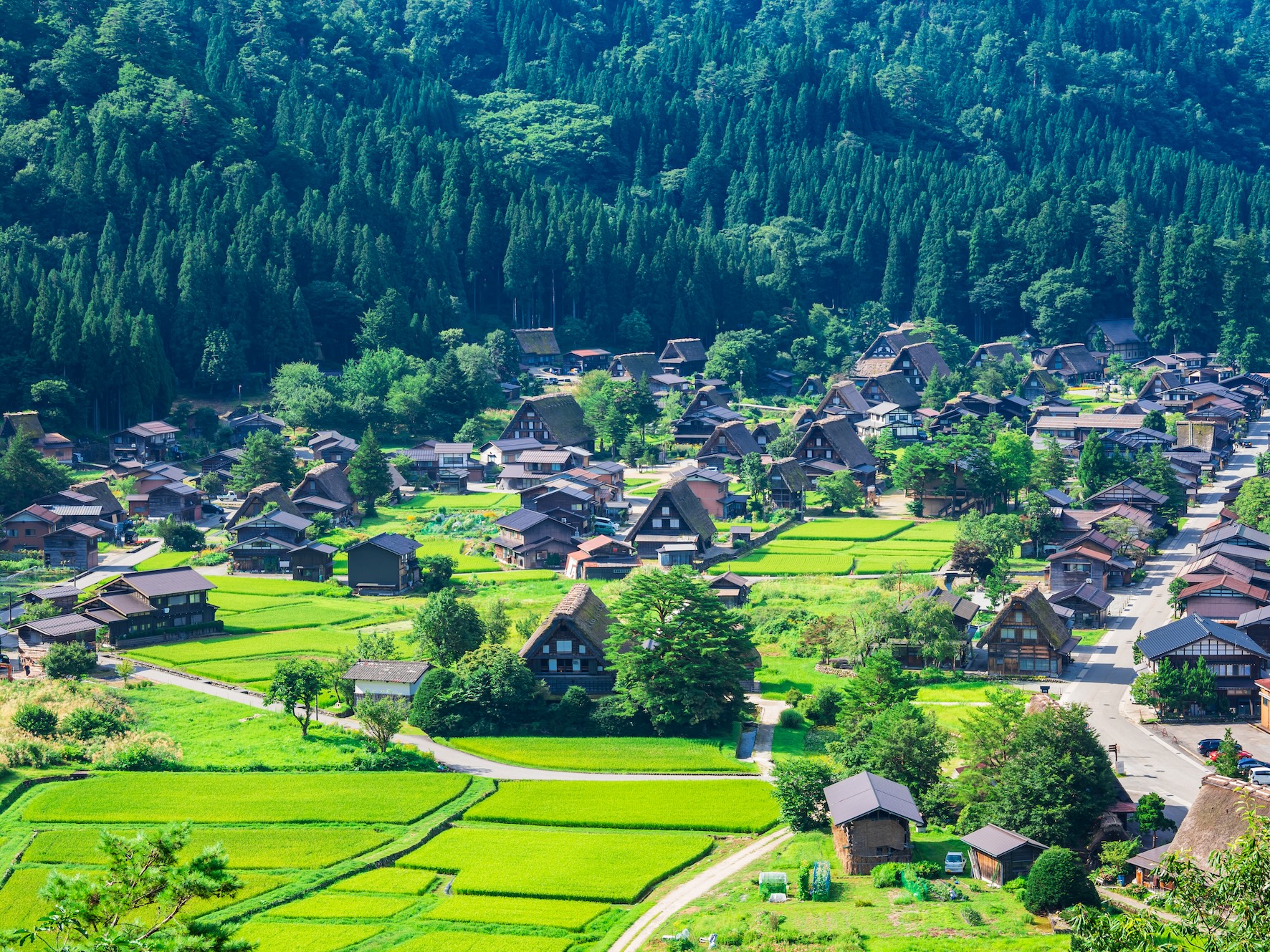
Satoyama (里山) is a Japanese term for the transitional zone between human settlements and mountains, where nature and people coexist through sustainable agriculture and forestry
What do people from different cultures see when they look at the same landscape? As landscape research becomes increasingly international, new studies are revealing both shared patterns of appreciation and culturally distinctive ways of understanding place, enriching rather than replacing existing knowledge.
In 2020, Japanese researcher Yoji Aoki published a review of seven years of presentations from the Japan Geoscience Union’s “International Comparison of Landscape Appreciation” sessions. Drawing together 109 studies from across Asia, Europe and beyond, the paper explored a deceptively simple question: do people from different cultures appreciate landscapes in the same way?
The answer appears to be both yes and no.
Since Aoki’s review was published, the conversation has continued to evolve. Recent research has increasingly explored not only how people visually appreciate landscapes, but how landscapes contribute to identity, wellbeing, belonging and stewardship. Researchers working with Indigenous communities have challenged assumptions embedded within many conventional assessment frameworks, while international studies have highlighted the limitations of relying too heavily on evidence drawn from Western, Educated, Industrialised, Rich and Democratic (WEIRD) populations. Rather than searching solely for universal preferences, landscape researchers are increasingly interested in understanding how different cultures, histories and knowledge systems shape relationships with place.
While many studies identified common human responses to landscape, others revealed how climate, culture, language, memory and lived experience shape what people notice, value and remember. Increasingly, the focus has shifted from asking whether people like particular landscapes to understanding why landscapes matter, and how different communities build meaning, attachment and identity through place.
For much of the twentieth century, landscape preference research often searched for universal truths. Theories such as prospect-refuge suggested that humans are naturally attracted to environments that offer broad views while also providing safety and shelter. Such ideas remain influential and undoubtedly capture something important about human experience. Yet Aoki’s review highlights a growing body of evidence showing that landscape appreciation is also deeply shaped by cultural context.
Across the presentations reviewed, researchers compared Japanese, Korean, Chinese, Indonesian, Russian, Australian, Indian, Fijian and many other perspectives. They explored responses to forests, parks, mountains, coloured autumn leaves, urban green spaces, sacred sites and even airport interiors. Again and again, the findings suggested that people notice different things, value different qualities and attach different meanings to the same environments.
This should perhaps not surprise us. Landscapes are never purely physical realities.
Consider, for example, a wooded mountain valley. A European landscape researcher might discuss scenic quality, biodiversity, access, heritage value or ecosystem services. A Japanese observer influenced by traditions such as satoyama may be equally interested in the long relationship between people and nature, seasonal change and the subtle traces of stewardship embedded within the landscape. In parts of the Middle East, appreciation may be shaped by very different relationships with water, shade, cultivation and survival in arid environments. Many Aboriginal and Torres Strait Islander peoples understand Country not simply as land, but as a living network of relationships connecting people, place, story and responsibility, seeing landscape as something lived with rather than simply viewed. For Andean communities in South America, mountains, rivers and agricultural terraces may be understood through traditions of reciprocity and kinship, where landscape is not simply a setting for human activity but part of an ongoing relationship between people, place and the more-than-human world.
None of these perspectives is more correct than another. They simply reflect different traditions of understanding what landscapes are and why they matter.
Yet culture is only part of the story. Increasingly, researchers are finding that attachment to particular places can be just as important as broader cultural traditions. Two people from the same country may understand the same landscape very differently depending on their experiences, memories, livelihoods and relationship with that place. Landscape appreciation is therefore shaped not only by where we come from, but by where we belong.
Beyond beauty
One of the most thought-provoking aspects of Aoki’s paper is the discussion of landscape evaluation factors. Landscape research has often focused on beauty, scenic quality or visual preference. Yet the review reveals a remarkable diversity of factors that researchers have used to understand human responses to landscape. These include absorption, tranquillity, fear, stress, openness, congestion, satisfaction, ugliness, physiological responses and even blood pressure changes.
This diversity matters because it reminds us that appreciation is not synonymous with liking.
A dramatic cliff edge may be appreciated because it inspires awe, despite generating discomfort. A battlefield landscape may evoke sadness and reflection rather than pleasure. A dense forest may feel restorative to one person and unsettling to another.
Landscape therefore operates across multiple emotional registers simultaneously.
Yet appreciation is only part of the story. Landscapes are also lived in, worked, contested and governed. They are shaped by power, ownership, memory and conflict as much as by aesthetics. A river may be valued simultaneously as a sacred place, a source of drinking water, a transport corridor and the focus of political disagreement. Understanding landscape therefore requires us to look beyond what people see towards the relationships they maintain with place.
Beyond the studies discussed by Aoki, researchers working with indigenous communities have often noted that landscapes may be understood relationally rather than primarily through aesthetic qualities. Mountains, rivers and forests may be regarded as ancestors, relatives or active participants in cultural life rather than simply visual scenery. While Western landscape traditions have often privileged visual appreciation, many other cultures emphasise connection, responsibility and reciprocity.
The question shifts from ‘Is this landscape beautiful?’ to ‘How do I belong within this landscape, and how does this landscape contribute to who I am?’
The influence of climate and geography
Aoki notes several examples where environmental conditions themselves influence appreciation. Indonesian participants, for example, showed distinctive responses to Japanese autumn colours because dramatic seasonal leaf change does not occur in much of Indonesia.
This observation points towards a broader truth. What feels ordinary in one place may appear extraordinary in another.
For someone raised in northern Scandinavia, long winter snow cover may feel familiar and comforting. For someone from a tropical climate, it may appear magical, exotic or even intimidating.
Likewise, people who grow up surrounded by mountains often develop different spatial expectations from those raised in flat landscapes. Coastal communities frequently develop strong attachments to horizons, changing weather and open views. People from densely populated urban environments may seek refuge in wilderness, while those from rural regions may find meaning in managed agricultural landscapes.
The physical landscape shapes culture, and culture in turn shapes landscape appreciation.
Language matters
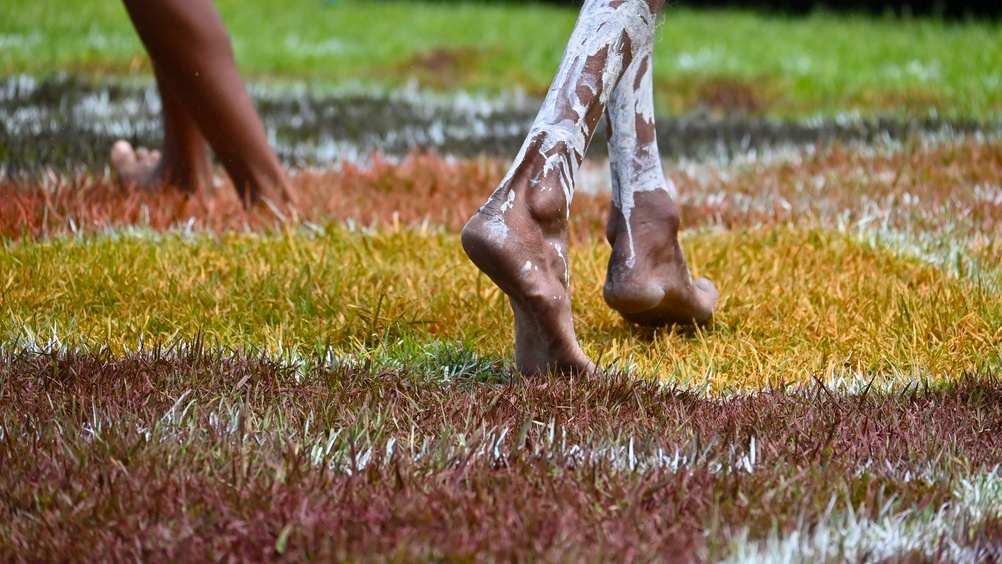
Indigenous Australians dancing to express connection to Ancestors, Country, and community through movement, song, and storytelling.
One of the most fascinating threads running through the papers reviewed by Aoki is the role of language and cultural expression. Several studies examined poetry, haiku and landscape description across Japanese, Russian and Chinese traditions.
This matters because language does not simply describe landscapes. It teaches us how to see them. Increasingly, researchers recognise that language also carries cultural knowledge about relationships with place, shaping not only what we notice in a landscape but how we understand our place within it.
Japanese cultural traditions often emphasise seasonal transitions, fleeting moments and subtle atmospheric qualities. Concepts such as mono no aware encourage sensitivity to impermanence. Russian landscape traditions frequently engage with vastness, weather and emotional depth. British landscape traditions are strongly influenced by pastoral imagery, enclosure and the interplay between nature and history.
Each tradition provides a lens through which landscapes become meaningful. In many cases, concepts do not translate neatly between cultures. Terms such as satoyama in Japan or Country in Aboriginal and Torres Strait Islander traditions carry layers of cultural meaning that extend beyond simple descriptions of land. As landscape research becomes more international, understanding these different ways of knowing may be just as important as comparing visual preferences.
From WEIRD to worldwide
Aoki also highlighted an important challenge the landscape research community continues to face. Much historical research relied heavily on participants from what psychologists describe as WEIRD populations: Western, Educated, Industrialised, Rich and Democratic societies.
This limitation is now widely recognised across many disciplines. When most studies draw upon a relatively narrow subset of humanity, it becomes difficult to know whether findings reflect universal human tendencies or culturally specific assumptions.
Yet the conversation has evolved beyond simply broadening participation. Increasingly, researchers from Asia, Africa, Latin America, Oceania and Indigenous communities worldwide are not only contributing new case studies but helping reshape the questions themselves. Different cultural traditions, knowledge systems and relationships with place can challenge assumptions that might otherwise go unnoticed.
Internationalisation is therefore revealing both the strengths and limitations of theories developed largely within European and other WEIRD contexts while opening new ways of understanding landscape experience. In many cases, it is also highlighting the importance of place-based knowledge and locally grounded perspectives alongside broader cultural comparisons.
Landscape research benefits enormously from voices originating in different climatic zones, political systems, religious traditions, languages and cultural histories. Findings from Europe or North America cannot automatically be assumed to apply equally in Southeast Asia, Africa, South America or Oceania. Equally, insights emerging from those regions increasingly enrich and reshape the wider field.
The more diverse the participants, perspectives and questions, the richer our understanding becomes.
Landscapes as memory
Another recurring theme in the papers reviewed by Aoki is memory. Researchers explored remembered landscapes, nostalgic spaces, childhood experiences, sacred places and landscapes shaped by historical events.
Memory may be one of the most powerful influences on appreciation.
A woodland may be valued not because of its ecological characteristics but because it was where someone played as a child.
A riverside may matter because generations of a family gathered there.
A war-damaged tree may become a living memorial.
Entire landscapes can carry collective memories. Agricultural terraces, pilgrimage routes, battlefields and industrial ruins often remain meaningful long after their original purpose has faded. Different societies may therefore value the same landscape not for what it looks like today, but for the stories it continues to hold.
Such meanings cannot be captured through visual analysis alone. They emerge from stories, identities and shared histories. Increasingly, researchers are finding that attachment to place, cultural meaning and personal identity may be just as important to wellbeing as the visual qualities of a landscape itself. Landscapes can provide continuity across generations, helping communities maintain connections to heritage, identity and belonging even as the physical environment changes.
This is particularly important for international dialogue. When researchers from different countries discuss landscapes, they are often discussing very different relationships with the past. They may also be discussing different ways in which landscapes contribute to collective identity, cultural resilience and a sense of home.
What this means for LRG
As LRG’s membership becomes increasingly international, the implications are significant.
The challenge is not choosing between universal and culturally specific understandings of landscape. It is recognising that both exist simultaneously. Shared concepts help us communicate across borders, while cultural differences enrich our understanding of what landscapes mean to different communities.
The value of international landscape research lies precisely in its ability to reveal different ways of understanding place. A researcher in Wales may learn from approaches developed in Indonesia. A scholar in New Zealand may gain insights from Japanese understandings of seasonality. A practitioner in Canada may discover new perspectives through dialogue with colleagues in India or Brazil.
Yet internationalisation does not diminish the importance of the local. If anything, it highlights it. By encountering different cultural traditions, relationships with place and ways of knowing, researchers are often encouraged to look again at the landscapes closest to home and the assumptions they bring to them.
International landscape research is perhaps most valuable when it allows shared concepts and different interpretations to coexist. The goal is not to eliminate difference but to understand it, recognising that every global conversation ultimately begins in a particular place.
Landscape is one of the few subjects that simultaneously connects ecology, culture, history, psychology, design and identity. It offers a shared topic through which very different communities can exchange perspectives while retaining their own distinct viewpoints.
A shared language of difference
Aoki ends his paper by suggesting that landscape appreciation studies may eventually help develop tools for environmental communication across different cultural backgrounds and climatic conditions.
That ambition feels increasingly relevant today.
Climate change, biodiversity loss, urbanisation and social change all require international cooperation. Yet people often experience and understand these challenges through local landscapes.
The landscapes of the Welsh uplands, the Japanese countryside, the Australian bush, the Scandinavian forests and the Indonesian archipelago are profoundly different. The values attached to them are different too. Yet each offers insight into the ways people build meaning, memory, identity and belonging through place.
Recognising these differences does not weaken international dialogue. It strengthens it. By learning how other communities understand and relate to their landscapes, we are often encouraged to look again at our own.
For an organisation such as LRG, committed to building a truly global research community, that may be one of the most valuable insights of all.
If Aoki’s review demonstrates anything, it is that landscape appreciation becomes more interesting as more voices enter the conversation. The challenge for landscape researchers is not simply to compare different cultures, but to remain curious about the assumptions hidden within their own.Top of Form
As LRG approaches its 60th anniversary, this conversation is only just beginning. Our anniversary programme will bring together researchers from around the world to explore the many ways landscapes are understood, experienced and valued across different cultures and disciplines. Looking beyond the celebrations, these ideas will also help shape the forthcoming third edition of the Routledge Companion to Landscape Studies, edited by LRG trustees Gillian Lawson, Emily Shakespeare, Merham Keleg, Emma Waterton and Tiffany Kaewen Dang. Currently in preparation and scheduled for publication by Routledge in 2027, the volume will bring together leading international perspectives on the changing field of landscape studies, reflecting many of the themes explored in this article. As more voices, cultures and knowledge traditions enter the conversation, our understanding of landscape continues to deepen—reminding us that every global discussion about place begins somewhere local.